Building & Branding MVP Forge
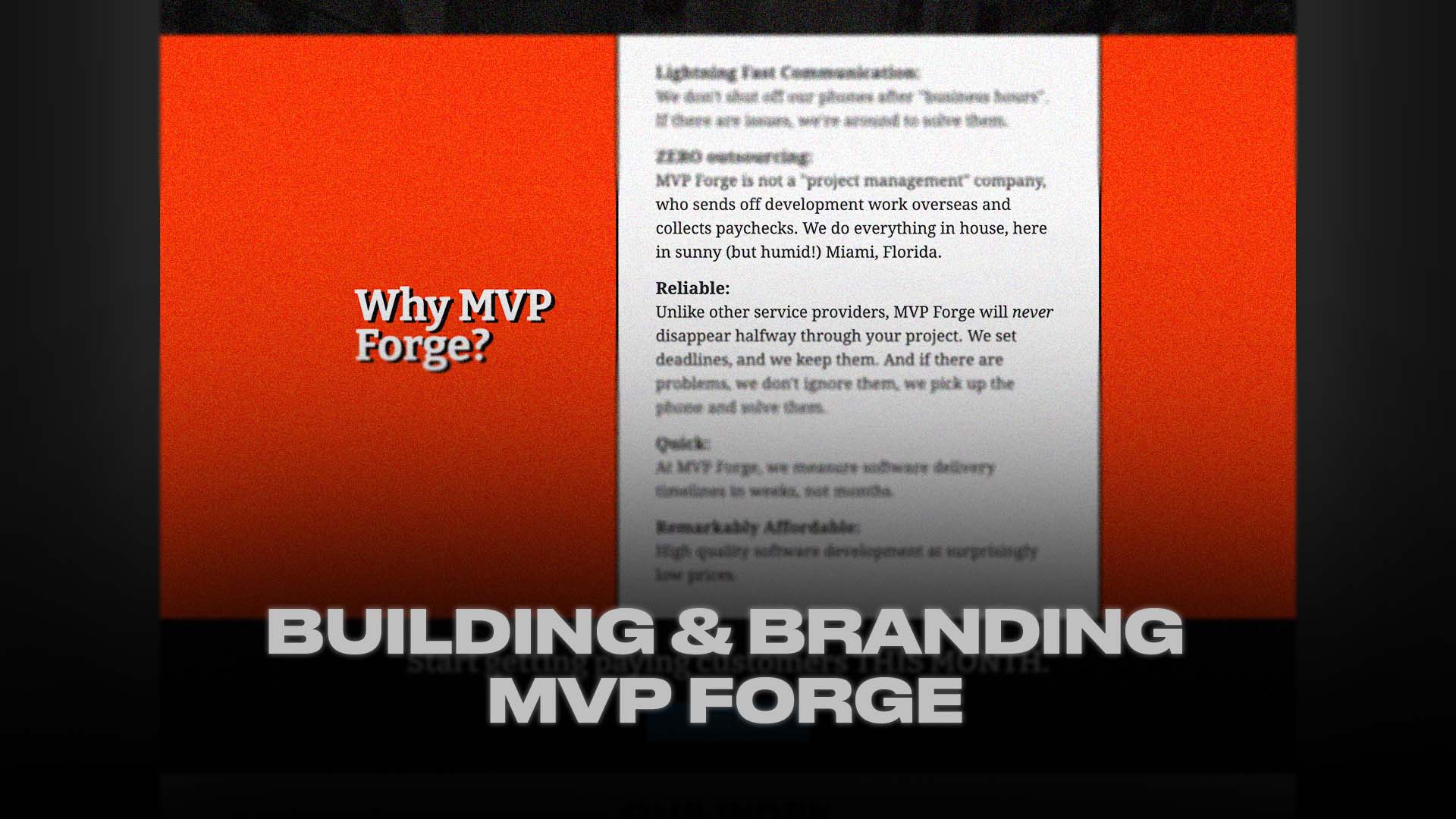
When building something new, there’s always a temptation to do the “easy” thing, take your brilliant idea and run with it. But without research validating a real customer need or opportunity, you’re sprinting with a blindfold on.
I always recommend starting with research. You need to think of yourself as an investor, finding the right opportunity to fund before you start putting resources behind it. This is a case study on exactly that.
My goal is always simple: I want to speak directly to the soul of my target audience. I want them to feel heard in a way that they never have before.
The MVP Forge was a software consultancy I built after discovering not only a need, but specific pain points that were’nt being adequately addressed by the industry.
Research:
As a startup marketer, I found myself at a lot of startup flavored events. Networking events, talks, hackathons, and everything in between. I had tons of great conversations, but one segment that consistently stuck out to me were non-technical founders who didn’t yet have a product built out. They were looking for technical co-founders or software development agencies to turn their ideas into real products. Many were corporate professionals who had money to invest, but had a fundamental distrust of technical outsourcing teams.
Secondary Research: Reddit, Hackernews, Quora…it was clear that there were a lot of people looking for someone to build their technology. More often than not, these weren’t people with half baked ideas. They had spent years doing the groundwork, researching the market, interviewing their market, validating the concept, and more. The technology itself was the final piece of the puzzle.
But they had a lot of fears! They worried about people stealing their ideas, building backdoors into their software, creating something that wasn’t scalable, delivering buggy code that would be expensive to fix, or becoming dependant on the development team for future work. A lot of these concerns came from horror stories they had heard from other founders, and while overseas development teams were often the most affordable option, many founders were nervous about the tradeoffs.
So there was an opportunity!
I could build the service around the actual fears and frustrurations these founders had. I would be local, transparent, founder friendly.
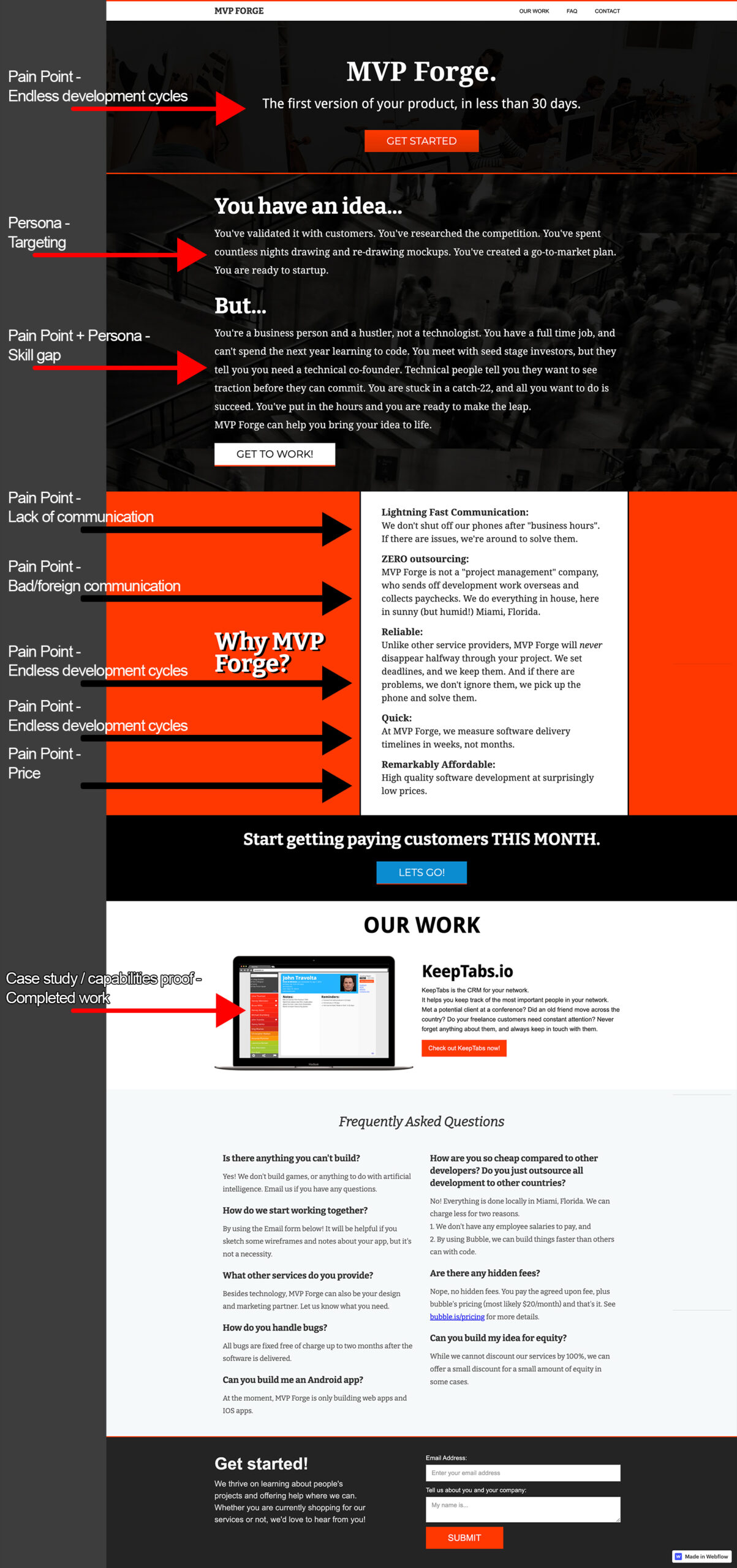
And it worked!
I was lucky enough to see immediate success with it, and I ran it on the side for about two years before eventually shuttering it. Along the way, I learned a lot of lessons, made some awesome connections, and built my name in the local tech scene.
Lessons Learned:
Scoping – Mockups became a paid service, and then part of the contract. Scope creep was real, and adding an extra button here or there isn’t the biggest deal, but adding a full analytics dashboard is. I learned to be more intentional about defining exactly what was included in the project.
Deposits up front – Early on, clients disappeared, sometimes after multiple hours of work. Once I started taking deposits, that literally never happened again.
Messaging is fluid – Towards the end of me running MVP Forge, I found myself telling people “I build products for tech workers”. It was another example of messaging evolving based on what I learned from actual customers